
Boom Library Road Rage Designed WAV是一款专业车祸音效库,提供24-bit/96kHz高品质音频,采用模块化设计,含90个碰撞序列和300多个独立音效,覆盖多种车型与撞击烈度,适合影视与游戏音频制作。
原始标题:Boom Library Road Rage Designed WAV
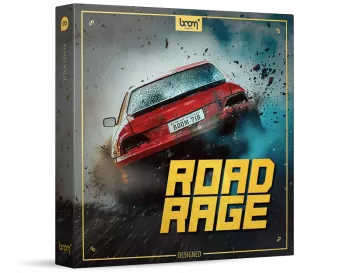
该音效库是由顶级音频开发商 BOOM Library 出品的 ROAD RAGE(Designed 版)车祸与车辆损毁主题专业音效库,规格为 24-bit / 96 kHz WAV 格式。不同于传统音效库只提供单一模糊的爆炸或碰撞成品音效,该库主打分层与颗粒化的模块化设计理念,将碰撞拆解为金属撞击、玻璃碎裂、塑料摩擦以及车体结构形变等干净、孤立的声音图层。其音频素材源自录音室精细撞击、废车场重型设备碾压、以及大卡车吊装高空坠落这三个动态范围不同的阶段,并采用车内/车外双视角同声录制,完美保障了声音在不同空间切换时的声学一致性。
在具体内容与专业应用上,该 Designed 版内含 90 个预先混合完成的碰撞序列(共计 300 多个独立音效),涵盖了包括小型轿车、SUV、卡车和摩托车在内的共 6 种车型与多类重型载具。每个序列都按照正面碰撞、复杂翻滚、车顶压碎和刮擦等事件分类,并提供了小、中、大三种撞击烈度选择。全套文件严格遵循 UCS(通用分类系统)标准,内嵌深度元数据,不仅能让影视剪辑师在紧迫的死线前“即拖即用”,更完美适配游戏音频团队(如结合 Wwise、FMOD 引擎)基于物理碰撞系统去动态触发特定的碎片或刮擦音效。
WAV | 24-bit / 96 kHz – 950 MB
FROM THE SMALLEST DENT TO
FULL-SCALE VEHICLE DESTRUCTION
Car Crash Sound Effects – Built From the Ground Up
Designed for those who are cutting a crash sequence and need something specific, not a wide spectacle but the precise sound of a door panel catching a concrete barrier or a windshield cracking under pressure. Most libraries offer you a finished crash event. But what you need is more granular. ROAD RAGE is a crash construction kit for vehicle damage, built from the individual elements that make collisions credible. Studio-recorded components for precision, scrapyard sessions for real-world events, and large-scale crane drops for destruction that shakes the room: hundreds of individual files, recorded from inside and outside the vehicles, designed to be assembled into crashes that match the exact scene.
Built Layer by Layer
A convincing crash is built from layers: impact, resonance, debris, and structural settling. ROAD RAGE captures each as a clean, isolated element across glass, metal, plastic, and rubber, so you assemble crashes that match the action precisely.
Studio, Scrapyard, Crane Drop
Three recording phases, each targeting a different part of the dynamic range: studio sessions for clean isolated components, scrapyard sessions using forklifts and heavy equipment to create impacts, and crane drops for the library’s highest-energy material.
Two Perspectives, One Take
Major impacts were captured from simultaneous positions: exterior M/S and A/B stereo, Ambisonic interior capture, and contact mics on the surfaces. Collisions from outside the car, from inside the car, and from the material itself.
Designed for Game Audio[/b]
Physics-driven destruction systems need hundreds of distinct, addressable elements. ROAD RAGE’s component structure, UCS-tagged metadata, and granular categories make individual elements adaptable to game engine triggers, from a low-speed scrape to a high-speed barrier impact.
Assembled From the Construction Kit
Every Designed sequence is built from the same Construction Kit elements available in the bundle. These are not separately produced: they are layered compositions from the raw material, showing one possible assembly at each scale and event type. Editors who need immediate drop-in options can use them as designed by our expert team. And for sound designers who want to understand and adapt what is built into each finished sequence they have direct access to the components.
What We Recorded
ROAD RAGE was produced across three recording phases, each covering a different part of the dynamic range.
In studio sessions, individual vehicle components were isolated and recorded in controlled conditions. Body panels, doors, bumpers, glass, and structural elements were struck, bent, scraped, and twisted from multiple angles and with controlled variations in force. The result is clean material: isolated impacts with consistent character, suited for precise layering without room reverberation or spillage from other elements. This phase also covered the full range of environmental contact surfaces, metal fencing, plastic barriers, road signs, poles, and surface material from dirt and grass through to ice, recorded at matched force levels, so elements from different categories combine credibly.
Scrapyard sessions introduced real-world force. Vehicles were pushed with forklifts, rolled manually to capture the full arc of body stress and movement, and dropped by a large scrap handler onto different surfaces. Microphones were placed inside the vehicles and around impact zones simultaneously, capturing the same events from external and internal perspectives in a single take. The scrapyard environment added the acoustic unpredictability of real structures under load, the resonance tail, the settling debris, and the frame creak after the main event, which controlled studio conditions are specifically designed to suppress.
The final production phase used a large crane to drop one vehicle onto another, and onto the ground on multiple sides. These sessions produced the highest-energy material in the library, recorded with the same multi-mic configuration as the scrapyard sessions for maximum post-production flexibility. These are not layered studio impacts: they are full structural failures where gravity takes over, and they sit at the top of the library’s dynamic range as the reference point for maximum vehicle destruction scale.
What’s so special about this library?
ROAD RAGE addresses the central problem in crash sound design: a pre-built impact locks in one interpretation of a collision. The same metal-on-metal contact sounds different depending on speed, angle, vehicle mass, surface, and scene. A library of individual components (glass, panel sections, structural elements, environmental contact material) gives sound designers the pieces to build each instance from scratch and adjust it to fit what the scene actually requires.
The three-tier recording structure maps directly onto the three tiers of crash scale designers work with: studio-recorded detail for low-energy and precision interactions, scrapyard material for mid- and high-energy real-world impacts, and crane-drop events for destruction at cinematic scale. Working across the full range within a single library, with consistent acoustic character and matching multi-mic positions throughout, avoids the seam that becomes audible when components from different sources are combined.
For game audio specifically, the component structure solves a workflow problem that pre-mixed libraries cannot: physics-based destruction systems fire individual events, door contact, panel deformation, windshield fracture, debris scatter. Each needs a credible sonic response at variable intensity. ROAD RAGE’s granular organization, UCS metadata, and multi-mic capture means those events can call specific elements directly, with interior and exterior versions available for whichever camera the engine is currently rendering.
The library also covers the material surrounding a crash that often does the real work in a sequence. A crash in a game environment or on a film location rarely involves only car-on-car contact. The scrapyard sessions captured impacts from road signs, chain-link fence collisions, plastic barrier contacts, pole hits, and surface material across dirt, grass, and ice. ROAD RAGE gives you what is around the impact as thoroughly as the impact itself.
The Designed layer completes the library for editors who need immediate results: head-on collisions, rollovers, roof crushes, and scrapes at small, medium, and large scales, for six car types and two truck types, in exterior and interior versions, plus two motorcycles. These are the same elements from the Construction Kit, assembled, not pre-baked replacements.
Use cases:
– Open-world driving and racing game productions requiring granular, component-level crash interactions
– Game audio teams building physics-driven destruction systems with individually addressable damage events
– Film and television sound designers layering crash sequences from the surrounding detail inward
– Post-production editors who need pre-built crash sequences under deadline pressure but want the option to go back to the components
– Sound designers working on vehicle-heavy action productions who need consistent crash material that holds up across multiple scenes and intensity levels
Tips:
– Start with the Designed sequences as a reference for the layering logic, then rebuild from Construction Kit components for scene-specific adjustments. The Designed content shows one possible option of the same elements you have direct access to.
– Interior and exterior versions of the same event are captured from the same take. When cutting between camera angles, exterior to in-car, use the matching pair to maintain acoustic continuity through the cut.
– The environmental contact surfaces (road signs, chain link fencing, poles, ice) were recorded at matched force levels to the vehicle body impacts. They layer directly with vehicle hits without level-matching overhead.
– Crane-drop material hits the dynamic ceiling. Use it as the single largest event in a sequence and build down from there with scrapyard and studio elements to establish scale contrast across the sequence.
– Tire screech and drift sounds were recorded on location with real vehicles. Pair them with panel rattles and suspension hits from the studio sessions for driving sequences that need both tire behavior and body response in the same event.
COMPATIBLE SOFTWARE
This BOOM Library of creature sounds comes as WAV files, meaning you can import and work with them in any software that can handle this file type.
RICH METADATA EMBEDDED
To provide you with the fastest and easiest workflow possible, all files contain extensive metadata like file description & keywords to quickly find the sounds you’re looking for. Metadata can be read and processed by audio management tools.
ACCORDING TO THE NEW UCS STANDARD
此处内容需要权限查看
会员免费查看