本教程教你用ROS2、树莓派5与Arduino打造AI智能无人车,实现视觉处理与底层驱动分离。通过OpenCV人脸识别、状态机逻辑及串口通信,构建具备环境感知与自主决策能力的系统,从接线到导航全覆盖。
原始标题:Building an AI Robot Car with ROS2, Raspberry Pi and Arduino
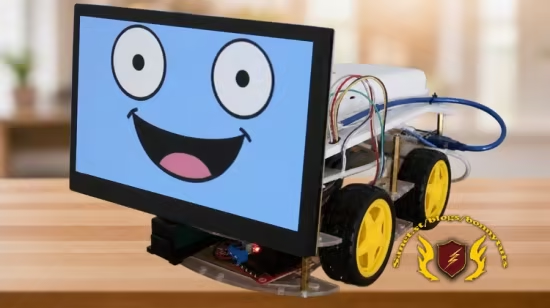
本教程旨在打造基于ROS2、Raspberry Pi 5与Arduino的智能无人车,通过高低位双控实现视觉处理与底层驱动分离,并利用pyserial实现串口指令透传。项目集成了基于OpenCV的计算机视觉引擎与自主行为模式,遵循解耦工程测试法构建具备环境感知与决策能力的系统。欲了解项目详情,可探索状态机逻辑、ROS2 Launch启动文件配置或L298N电机驱动的物理接线图。
Published 8/2026
Created by Felipe Tambasco
MP4 | Video: h264, 1920×1080 | Audio: AAC, 44.1 KHz, 2 Ch
Level: All Levels | Genre: eLearning | Language: English | Duration: 34 Lectures ( 5h 32m ) | Size: 7 GB
Design, build, and program an autonomous robot car using ROS2, Raspberry Pi, and Arduino – from wiring to navigation.
What you’ll learn
⚡ Build a fully functional AI-powered robot car using ROS2, Raspberry Pi 5, and Arduino Uno
⚡ Program microcontroller-level control with Arduino and integrate it into a ROS2 software stack
⚡ Implement a computer vision engine with face recognition
⚡ Apply engineering trade-offs, project organization, and systematic testing to a multi-component robotics project
Requirements
❗ Basic Python programming knowledge.
❗ Basic familiarity with Ubuntu and ROS2
❗ A Raspberry Pi 5 (running Ubuntu), an Arduino Uno (or similar microcontroller), a 4 wheels robot frame and 2 L298N motor drivers.
❗ Basic mechanics and electronics components (jumper wires, screws, screwdriver, multimeter).
❗ A power bank and 9V batteries.
❗ Optional: 7 inches LCD screen with speakers.
Description
This course teaches you how to build a fully functional AI-powered robot car from the ground up using ROS2, Claude, Raspberry Pi 5, and Arduino Uno.
You’ll learn how to design the hardware architecture, wire motors, program microcontroller-level control with Arduino, and integrate everything into a ROS2 software stack running on a Raspberry Pi 5.
The robot operates in three distinct modes — explore, patrol, and hide-and-seek — built on behavior-based robotics principles. Each mode combines simple behaviors into more complex, purposeful actions.
The autonomous navigation uses a usb camera to perceive its surroundings, handled by a lightweight yet robust obstacle avoidance module that keeps the robot moving safely through unpredictable environments.
This course also teaches you how to think like an engineer — making trade-offs between cost, performance, and complexity, organizing a multi-component project, and systematically testing each subsystem before integrating it into the full robot.
By the end of the course, you will have built a working robot car capable of exploring its environment and navigating autonomously, you will understand how to apply ROS2 concepts to real-world robotics projects and you’ll have the practical skills to design, build, and program your own autonomous robot from scratch, ready to extend it further.
Safety disclaimer: Working with electronics, mechanics, and power supplies carries inherent risks. Always follow proper safety precautions, double-check your wiring before powering on any component, and work at your own risk. The instructor is not responsible for any damage, injury, or loss resulting from following this course.
Additional costs disclaimer: This course involves using the Claude and OpenAI APIs, which may incur usage costs charged by Anthropic and OpenAI respectively. You are responsible for any charges associated with your API usage.
Who this course is for
⭐ Beginner to intermediate makers, hobbyists, and students who want hands-on experience building a real robot with ROS2, Raspberry Pi, and Arduino
⭐ Electronics or computer science students looking to apply classroom concepts to a physical robotics project
⭐ Software developers who want to learn embedded systems, hardware integration, and robotics
⭐ Robotics enthusiasts who want to learn behavior-based robotics and autonomous navigation
此处内容需要权限查看
会员免费查看