本课程由Umar Lone讲解,围绕现代C++系统学习GoF全部11种行为型设计模式,结合UML类图与工业级案例,重点解析设计权衡与过度设计误区,帮助开发者写出低耦合、易维护的代码。
原始标题:Behavioral Design Patterns in Modern C++
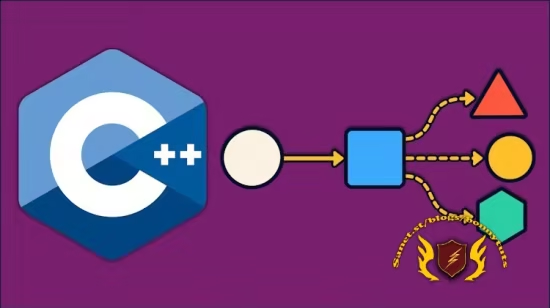
本课程是由 Umar Lone 于 2026 年 10 月发布的高级视频教程,包含 147 节课(总计 12 小时 28 分钟),核心专注于在现代 C++(Modern C++) 框架下深入学习并实战落地 GoF(四人帮)的全部 11 种行为型设计模式。
该课程面向具备类、继承、多态及指针等基础 C++ 知识的开发者,采用“理论概念 + UML 类图剖析 + 真实工业级案例”的递进式教学,旨在利用现代 C++ 的核心特性和编程惯用法(Idioms)来编写低耦合、高可扩展且易维护的代码。与传统的死记硬背不同,课程将教学重心放在设计权衡(Trade-offs)上,通过对比相似模式、探讨替代方案以及识别“过度设计”的误区,帮助工程师在实际业务中理性评估何时该引入模式、何时该保持简单直白,从而全面提升面向对象的设计决策能力。
Published 10/2026
Created by Umar Lone
MP4 | Video: h264, 1920×1080 | Audio: AAC, 44.1 KHz, 2 Ch
Level: All Levels | Genre: eLearning | Language: English | Duration: 147 Lectures ( 12h 28m ) | Size: 6.9 GB
Learn and apply all 11 behavioral design patterns in real-world implementations using Modern C++
What you’ll learn
⚡ Understand and implement all 11 Gang of Four behavioral design patterns in Modern C++
⚡ Understand and implement all behavioral design patterns using Modern C++
⚡ mplement each pattern through practical, easy-to-understand C++ examples
⚡ Apply behavioral design patterns to real-life scenarios through practical examples in Modern C++
Requirements
❗ Basic knowledge of C++ programming, including classes, objects, inheritance, and polymorphism
❗ Familiarity with pointers, references, and basic object-oriented programming concepts
❗ No prior knowledge of design patterns is required
Description
Learn how to implement all 11 Gang of Four behavioral design patterns using Modern C++!
Behavioral design patterns help you organize object interactions, encapsulate behavior, and build software that is easier to extend and maintain. But understanding a pattern’s structure is only part of the picture. Knowing when to use it, what trade-offs it introduces, and when a simpler alternative is preferable is equally important.
This course takes a practical, hands-on approach to learning behavioral design patterns using Modern C++ features and idioms. Each pattern is introduced with a simple example to help you understand its fundamental idea. We then implement the pattern in C++, examining its structure and how its components interact. UML class diagrams are used to explain the design, relationships between classes, and responsibilities of the different participants.
Once the basic implementation is clear, we move on to a real-world example that demonstrates how the pattern can be applied to a practical software design problem. Throughout the course, we use Modern C++ features and idioms to write clean, expressive, and maintainable code.
Learning a design pattern involves more than reproducing its class structure. For each pattern, we discuss its advantages and disadvantages, the problems it solves, and the trade-offs involved in using it.
We also examine alternatives where appropriate, compare patterns that may appear similar, and discuss situations in which a pattern might be unnecessary or even counterproductive. The goal is to help you make informed design decisions rather than apply patterns simply because they exist.
You will develop a better understanding of how behavioral patterns can reduce coupling, separate responsibilities, simplify complex interactions, and make software easier to extend. At the same time, you will learn to recognize when introducing a pattern adds unnecessary complexity and when a straightforward implementation is the better choice.
By the end of the course, you will have a practical understanding of all 11 behavioral design patterns, their implementations in Modern C++, and the considerations involved in choosing the right approach for a given problem.
Who this course is for
⭐ C++ developers who want to learn behavioral design patterns through practical examples
⭐ Developers who know C++ but are new to the Gang of Four design patterns
⭐ Experienced programmers who want to understand how behavioral design patterns solve real-world software design problems
⭐ C++ programmers who want to improve their object-oriented design skills and write more maintainable code
⭐ Software engineers who want to strengthen their understanding of software design and reusable C++ solutions
此处内容需要权限查看
会员免费查看