本课程面向C语言初学者,3小时精讲Big-O复杂度分析与递推方程求解,并深入指针与动态内存管理,手把手用固定数组和动态指针从零构建栈结构,夯实底层数据结构基础。
原始标题:Data Structures and Algorithm Analysis
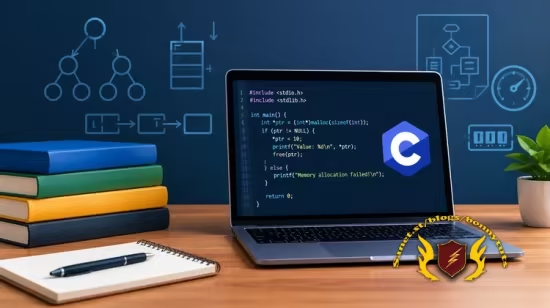
本课程是一门针对 C 语言初学者的算法分析与底层数据结构硬核实战课 。在 3 小时的精炼教学中,它摒弃了死记硬背的代码模板,专注于培养“代码如何消耗 CPU 时间和物理内存”的底层直觉。课程前半部分侧重数学理论与复杂度分析,带你玩转 Big-O 等渐进符号,并攻克代入法、递归树等递推方程求解难关 ;后半部分则直击 C 语言最核心的指针与动态内存管理,带你徒手用固定数组与动态指针两种方式从零构建标准栈(Stack)结构。通过将抽象的数学推导与硬核的内存布局、指针逻辑紧密结合,为后续攻克树、堆、图等高级数据结构奠定坚不可摧的底层技术基石。
Published 10/2026
Created by Rajakani M
MP4 | Video: h264, 1920×1080 | Audio: AAC, 44.1 KHz, 2 Ch
Level: Beginner | Genre: eLearning | Language: English | Duration: 7 Lectures ( 3h 3m ) | Size: 1.1 GB
Master asymptotic analysis, solve recurrences, and implement dynamic memory and stacks from scratch in C.
What you’ll learn
⚡ Evaluate and compare algorithm efficiency using formal Big-O, Big-Omega, and Big-Theta asymptotic notations.
⚡ Solve recurrence relations for recursive algorithms using the substitution and recursion tree methods.
⚡ Manage dynamic memory allocation in C to build dynamic C structures.
⚡ Build stack data structures from scratch in C using both fixed arrays and dynamic pointers.
Requirements
❗ No prior knowledge of Data Structures or Algorithm Analysis is required—all concepts are taught from the fundamentals.
❗ Basic familiarity with C programming syntax (variables, loops, and functions).
❗ A computer with a C compiler installed (GCC, Clang) or any C-compatible IDE.
Description
Mastering Data Structures and Algorithms begins not with memorizing boilerplate templates, but with understanding how code consumes CPU time and physical memory. This course bridges the gap between theoretical algorithm analysis and concrete low-level implementation in C, giving you both the mathematical intuition and the pointer mechanics required to build efficient software.
Why Learn DSA Fundamentals with C?
While modern high-level languages abstract away memory management, C forces you to understand exactly what happens under the hood. By handling pointers, manual allocations, and memory layouts yourself, you build an enduring foundation that makes learning advanced data structures (such as trees, heaps, and graphs) significantly easier in any language.Each module pairs theoretical mechanics with practical C code demonstrations, so you walk away with working code and a clear understanding of why specific design choices are made.
Curriculum Breakdown by Section
✨Section 1: Introduction to Algorithms & Problem-Solving:
Establish the foundation of algorithmic thinking. Learn how systematic problem-solving works, the role of algorithms in computing, and the distinction between real-world clock time and computational complexity.
✨Section 2: Asymptotic Notations & Recurrence Relations:
Move beyond vague ideas of “fast” and “slow” code. Analyze loops and operations using formal Big-O, Big-Omega, and Big-Theta bounds. Then, break down recursive equations step-by-step using both the substitution method and recursion trees to evaluate divide-and-conquer strategies.
✨Section 3: Dynamic Memory Allocation & Structures in C:
Explore runtime heap memory management with a hands-on focus on malloc. Learn how to allocate contiguous memory blocks for dynamic arrays, initialize them cleanly, and scale up to creating dynamic arrays of structures for complex record management without memory leaks.
✨Section 4: The Stack Data Structure:
Implement the fundamental LIFO (Last-In, First-Out) abstract data type from the ground up. You will build and trace stacks using both fixed-size static arrays and dynamic heap pointers, followed by practical demonstrations of how stacks power execution traces and solve classic computing problems.
By the end of this course, you will have working C code implementations on your machine, a solid command of theoretical complexity, and the analytical confidence needed for advanced computer science topics.
Who this course is for
⭐ Undergraduate and postgraduate students studying Data Structures, Design and Analysis of Algorithms (DAA), or related computer science subjects.
⭐ Beginners who want to build a strong foundation in data structures and algorithm design from scratch.
⭐ Learners preparing for technical interviews, coding assessments, and campus placement drives.
⭐ Students preparing for university examinations, lab assessments, and academic projects.
此处内容需要权限查看
会员免费查看