本课程用双轨制教学,先用纯Python从零手写ReAct智能体,再用LangGraph重构,涵盖状态管理、MCP、RAG、内存、安全与部署,助你彻底掌握智能体底层原理与生产级调试能力。
原始标题:Build an AI Agent from Scratch with LangGraph
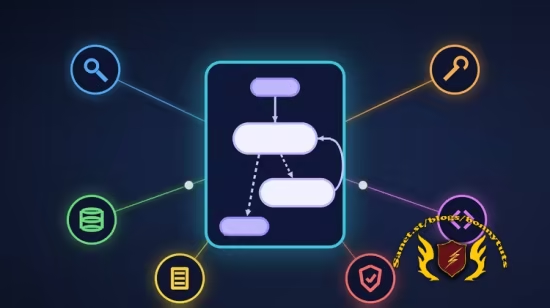
本课程由 Thanh Vũ 于 2026年10月 推出,是一门总时长 1小时48分钟(包含64节短精炼讲座、15个章节)的中级大模型智能体(AI Agent)实战进阶教程。课程采用独特的“双轨制”教学法,摒弃了直接调用框架的黑盒做法,首先引导学员用 纯 Python 从零手写一个具备工具调用、结构化输出和错误处理的 ReAct 智能体循环;随后使用 LangGraph 重构该智能体,深度解锁状态管理(State)、状态融合器(Reducers)、条件边和子图等核心概念。
在 658.1 MB 的精简全栈内容中,学员将全面掌握 2026 年最前沿的智能体技术栈,包括基于 MCP 协议 的工具生态、智能体 RAG(检索增强生成)、长短期内存压缩、代码沙箱安全运行、人工介入(Human-in-the-loop)、多智能体协同协议(A2A)、Prompt 注入防御、FastAPI 与 Docker 部署,以及利用 LLM 裁判进行回归测试的完整生产级闭环,非常适合想要彻底拆解智能体底层原理并具备自信调试、优化能力的 Python 开发者。
Published 10/2026
Created by Thanh Vũ
MP4 | Video: h264, 1920×1080 | Audio: AAC, 44.1 KHz, 2 Ch
Level: Intermediate | Genre: eLearning | Language: English + subtitle | Duration: 64 Lectures ( 1h 48m ) | Size: 658.1 MB
Code a ReAct agent in plain Python, rebuild it in LangGraph, add RAG, memory, MCP, guardrails, evals and deployment
What you’ll learn
⚡ Write a working ReAct agent in plain Python: the model loop, tool calling, structured answers and error handling
⚡ Build the same agents in LangGraph with state, reducers, ToolNode, conditional edges, Send and Command
⚡ Give agents knowledge with BM25 retrieval, citations, safe file tools and agentic RAG
⚡ Add short- and long-term memory with compaction, sessions, LangGraph checkpointers and stores
⚡ Make agents plan, reflect, run code in a sandbox and pause for human approval with interrupt()
⚡ Coordinate several agents with agents-as-tools, handoffs, supervisors, subgraphs and the A2A protocol
⚡ Evaluate agents with code graders, trajectory checks, a calibrated LLM judge and regression tests
⚡ Defend agents against prompt injection, trace every call, measure cost per answer and deploy with FastAPI and Docker
Requirements
❗ Comfortable with Python: functions, classes, dictionaries, and a little async/await
❗ No machine learning background needed: we use models through an API
❗ A free Groq API key (or an OpenAI key), also used inside the Udemy Labs
❗ Python 3.10+ on your own computer, or Google Colab, or the Udemy Labs in the browser
Description
Most AI agent tutorials start with a framework and a magic create_agent() call. When the agent loops forever, leaks data or answers with confidence from the wrong document, you are left guessing what happened inside.
In this course you build the agent yourself first. You write the agent loop in plain Python: a short loop that calls a model, runs tools and feeds the results back. Then you rebuild the same agent withLangGraph, so every node, edge and checkpoint has something you already understand behind it.
Every chapter has two parts
✅From scratch: a small Python package, tiny_agents, that grows with the course: tools and function calling, the ReAct loop, structured answers, RAG, memory, planning, a code sandbox, multi-agent teams, evaluation, guardrails and tracing. –The LangGraph version: the same idea as a graph: state and reducers, ToolNode, conditional edges and Send, agentic RAG, checkpointers and long-term memory, plan-and-execute, human-in-the-loop with interrupt(), supervisors, handoffs and subgraphs, testing, retries, caching and durable execution.
What makes it different
✅Real runs, honest numbers. Every result in the videos comes from a real model call, recorded and replayable. When the model skips an instruction, falls for a prompt injection or loops for eight calls, the course shows it, explains why from the trace, and fixes it. –Free to follow. Examples run on open-weight gpt-oss models through Groq’s free tier, or on OpenAI. The last chapter runs the agent on small open models on a laptop with Ollama. –The 2026 stack. MCP tools, the A2A protocol, the OpenAI Agents SDK and PydanticAI compared with LangGraph, prompt-injection defences, cost per answer, and a FastAPI service in a Docker container.
What is inside
✅ 15 sections, 64 short lectures, about 1 hour 50 minutes of focused video. Every number on screen comes from the notebooks. – 15 quizzes with 194 questions. – 27 hands-on Udemy Labs: exercises with checks that print ✓ when your code is right. – Practice and solution notebooks for every lesson, also as self-contained Google Colab notebooks. – English narration with English and Vietnamese captions.
Course outline
✨ What is an AI agent? · LangGraph 101: state, nodes and edges
✨ LLM APIs for agents · reducers and streaming
✨ Tools, function calling and MCP · ToolNode and MCP tools
✨ A ReAct agent from scratch · the ReAct graph
✨ Workflows vs agents: six patterns · conditional edges and Send
✨ Knowledge with RAG and file tools · agentic RAG
✨ Memory that lasts · checkpointers, threads and long-term memory
✨ Planning and reflection · plan-and-execute with a critic
✨ Running code safely · human-in-the-loop with interrupt()
✨ Multi-agent systems and A2A · supervisors, handoffs and subgraphs
✨ Evaluating agents · testing and evaluating graphs
✨ Agent frameworks in 2026 · LangGraph in production
✨ Security and guardrails
✨ Observability and cost
✨ Open models and deployment
By the end you will not just know how to call an agent framework. You will know what it does for you, and you will be able to debug it when it does not.
Narration uses an AI-synthesized clone of the instructor’s own voice. Code builds on the MIT-licensed shangrilar/ai-agent-from-scratch repository. LangGraph, the OpenAI Agents SDK and PydanticAI are open-source projects by their authors. Examples, animations, exercises and quizzes are original to this course.
Who this course is for
⭐ Python developers who want to build AI agents and understand what happens inside them
⭐ Engineers who use LangGraph or another agent framework and want to debug, test and secure it with confidence
⭐ Students and data scientists moving from prompting to tool-using, multi-step AI systems
⭐ Anyone who has tried an agent framework and felt it was magic: this course takes the magic apart
此处内容需要权限查看
会员免费查看