本课程专为嵌入式C语言初学者设计,通过STM32裸机驱动开发,掌握GPIO、串口、定时器中断等底层寄存器操作,最终实现控制谷歌恐龙游戏,提升实战能力。
原始标题:Embedded Programming With STM32 GPIO Driver
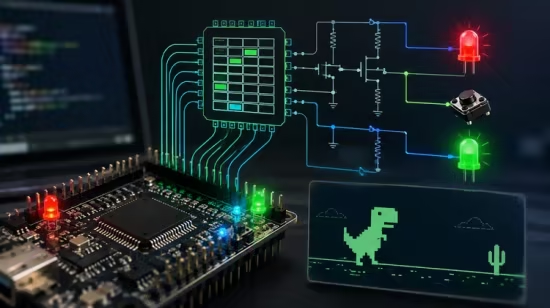
本课程专为嵌入式C语言初学者设计,主打STM32裸机外设驱动开发实战,抛弃HAL库框架,直击底层寄存器位操作核心。通过查阅手册与硬件编程,学员将掌握GPIO、串口、定时器中断等技能,最终通过自写驱动实现控制谷歌恐龙游戏,达成从零基础到模块化封装的跨越。
Published 8/2026
MP4 | Video: h264, 1920×1080 | Audio: AAC, 44.1 KHz, 2 Ch
Language: English + subtitle | Duration: 4h 45m | Size: 2.28 GB
Learn to write GPIO driver for STM32
What you’ll learn
Master bare-metal driver development for essential peripherals like GPIO, USART/UART, Timer (Output Compare and PWM)— no HAL, no magic, just full control
Learn to decode technical reference manuals and extract register-level details — a skill transferable across any microcontroller family, not just STM32
Think like an embedded engineer: debug, build, and solve real problems
Control a real Dino Game using your own embedded drivers
Understand microcontroller architecture: buses, block diagrams, and how the CPU talks to peripherals
Implement interrupt-driven programming for GPIOs, USART, and Timers
Unlock creative thinking by exploring how embedded systems can power games — not just LEDs and sensors
Gain confidence in debugging techniques using breakpoints, register watch view to troubleshoot
Get a developer mindset: instead of relying on libraries, you’ll build your own tools — understanding what’s happening at the lowest level
Organize your code clearly with proper structure, comment and separation
Requirements
Basic knowledge of C programming language
Description
Master GPIO in Embedded C — Build Your First Driver From Scratch
Want to understand what really happens when you turn an LED on, read a button, or control a microcontroller pin?
If you’re learning Embedded C and feel like libraries and HALs are hiding what’s actually happening inside the hardware, this free course is a great place to start.
In this hands-on course, you’ll learn howGPIO works at the register level and build your own GPIO driver from scratch usingEmbedded C.
No HAL
No complicated frameworks
No black boxes
Just you, the microcontroller, and the hardware registers
What you’ll learn
By the end of this course, you’ll understand
– What GPIO is and how microcontroller pins actually work
– How GPIO peripherals are connected to the CPU
– How memory-mapped registers control hardware
– How to configure GPIO pins as inputs and outputs
– How to read digital inputs such as buttons
– How to control outputs such as LEDs
– How to manipulate registers directly using Embedded C
– How to structure and build your own reusable GPIO driver
– How software instructions translate into real hardware behavior
Instead of spending hours reading complicated datasheets or memorizing register names, we’ll break each concept down usingclear diagrams, visual explanations, and live coding.
You’ll see the thought process behind the code and understandwhy each register and bit matters.
Most importantly, you won’t just copy and paste code. You’ll learn how tothink like an embedded engineer when working with microcontroller peripherals.
And GPIO is only the beginning…
GPIO is one of the fundamental building blocks of embedded systems.
Once you understand how to control hardware directly through registers, you can apply the same concepts to other peripherals such asUART, timers, interrupts, PWM, and more.
That’s exactly where the full course takes you.
In the complete course,Embedded Driver: Build Drivers and Control Dino Game, you’ll go beyond GPIO and buildGPIO, UART, and Timer drivers from scratch. Then, you’ll combine what you’ve learned to control a fun and interactiveDino Game.
So if you’re ready to move beyond simply using libraries and start understandingwhat’s actually happening inside your microcontroller, start here.
Stop relying on libraries. Start understanding the hardware.
Let’s build your first driver.
Who this course is for
Beginner embedded programmers – who want to move beyond blinking LEDs and start building real drivers from scratch
Engineering students – who want a practical, hands-on way to understand microcontroller peripherals
Developers tired of black-box libraries (like HAL) and ready to learn what’s really happening at the register level
Hobbyists and makers – looking to apply embedded knowledge to fun projects like controlling a Dino game.
Anyone interested in real-time embedded systems, interrupt handling, and low-level control.
Learners who enjoy project-based courses and want to build something fun while learning essential skills.
此处内容需要权限查看
会员免费查看