嵌入式C固件架构:模块化设计实战
本课程深入讲解嵌入式C固件模块化开发与最佳实践,教你构建四层架构,实现代码可移植、安全且专业,适合中级嵌入式工程师进阶学习。

Published 4/2026
Created by Mahmood Saadat
MP4 | Video: h264, 1920×1080 | Audio: AAC, 44.1 KHz, 2 Ch
Level: Intermediate | Genre: eLearning | Language: English | Duration: 29 Lectures ( 2h 28m ) | Size: 2.16 GB
Embedded C Firmware Modular Development and Best Practice
What you’ll learn
✓ Firmware Architecture
✓ Modular Design
✓ C Best Practice
✓ Layered Structure
✓ Embedded Firmware
✓ Layered Structure
Requirements
● C programming
● Embedded Systems
● MCUs
Description
Stop writing firmware that only works on one chip. Most electronic engineers can make a microcontroller “work,” but few can design firmware that is professional, safe, and truly portable. If your main.c is hundreds of lines long, or if switching from an STM32 to an AVR requires a total rewrite, this course is for you.
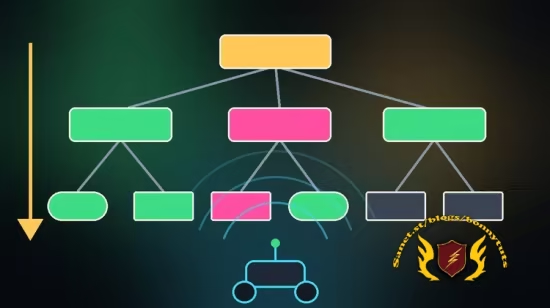
This course is a deep dive into Firmware Architecture. We move beyond simple “bare-metal” coding and teach you how to think like a Software Architect. You will learn to build a robust, 4-layer stack that separates your high-level logic from the low-level silicon.
The 4-Layer Framework You Will Master
• The HAL (Hardware Abstraction Layer): Hiding the silicon and register complexity.
• The Device Layer: Building reusable drivers for external components like sensors and LCDs.
• The Interface Layer: Creating a “contract” between your hardware and your brain.
• The Application Layer: Writing pure, hardware-agnostic business logic.
Why This Course Is Different
• Architectural Focus: We don’t teach C syntax; we teach C strategy.
• Standards: Every line of code follows standards, including “Yoda Conditions” and strict naming conventions.
• Hardware Agnostic: The principles you learn here apply to any MCU, STM32, PIC, AVR, ESP32, or ARM Cortex.
What You Will Learn
• Design a modular 4-layer firmware project from scratch.
• Implement the code according to an Embedded C Coding Standard.
• Decouple application logic from hardware using the Interface Pattern.
• Create a “Professional Starter Kit” template to jumpstart any future project.
• Structure the Application Layer with dedicated Init, Callback, and Global modules.
• Apply defensive programming techniques to eliminate “Magic Numbers” and assignment bugs.
Are there any course requirements or prerequisites?
• Understanding of the C programming language (loops, pointers, structs).
• Familiarity with any Microcontroller (MCU) and basic electronics.
• A desire to move from “Hobbyist” to “Professional” firmware habits.
Who this course is for
■ Intermidiate Embedded C Developer
■ Senior Embedded C Developer
■ Electronic Engineer
■ Embedded Engineer
■ Industry Professionals
■ Students & Career Changers
此处内容需要权限查看
会员免费查看